Scene I. Before LEONATO'S House. (CONT'D)
BEATRICE.
O Lord, he will hang upon him like a disease: he is sooner caught than
the pestilence, and the taker runs presently mad. God help the noble
Claudio! If he have caught the Benedick, it will cost him a thousand
pound ere a' be cured.
MESSENGER.
I will hold friends with you, lady.
BEATRICE.
Do, good friend.
LEONATO.
You will never run mad, niece.
BEATRICE.
No, not till a hot January.
MESSENGER.
Don Pedro is approached.
[Enter DON PEDRO, DON JOHN, CLAUDIO, BENEDICK, BALTHAZAR, and
Others.]
DON PEDRO.
Good Signior Leonato, you are come to meet your trouble: the fashion
of the world is to avoid cost, and you encounter it.
LEONATO.
Never came trouble to my house in the likeness of your Grace, for
trouble being gone, comfort should remain; but when you depart from me,
sorrow abides and happiness takes his leave.
DON PEDRO.
You embrace your charge too willingly. I think this is your daughter.
LEONATO.
Her mother hath many times told me so.
BENEDICK.
Were you in doubt, sir, that you asked her?
LEONATO.
Signior Benedick, no; for then were you a child.
DON PEDRO.
You have it full, Benedick: we may guess by this what you are, being
a man. Truly the lady fathers herself. Be happy, lady, for you are
like an honourable father.
BENEDICK.
If Signior Leonato be her father, she would not have his head on her
shoulders for all Messina, as like him as she is.
BEATRICE.
I wonder that you will still be talking, Signior Benedick: nobody
marks you.
BENEDICK.
What! my dear Lady Disdain, are you yet living?
BEATRICE.
Is it possible Disdain should die while she hath such meet food to
feed it as Signior Benedick? Courtesy itself must convert to disdain
if you come in her presence.
BENEDICK.
Then is courtesy a turncoat. But it is certain I am loved of all ladies,
only you excepted; and I would I could find in my heart that I had not
a hard heart;for, truly, I love none.
BEATRICE.
A dear happiness to women: they would else have been troubled with a
pernicious suitor. I thank God and my cold blood, I am of your humour
for that. I had rather hear my dog bark at a crow than a man swear he
loves me.
BENEDICK.
God keep your ladyship still in that mind;so some gentleman or other
shallscape a predestinate scratched face.
BEATRICE.
Scratching could not make it worse, an 'twere such a face as yours
were.
BENEDICK.
Well, you are a rare parrot-teacher.
BEATRICE.
A bird of my tongue is better than a beast of yours.
BENEDICK.
I would my horse had the speed of your tongue, and so good a
continuer. But keep your way, i' God's name; I have done.
BEATRICE.
You always end with a jade's trick: I know you of old.
DON PEDRO.
That is the sum of all, Leonato: Signior Claudio, and Signior Benedick,
my dear friend Leonato hath invited you all. I tell him we shall stay
here at the least a month, and he heartly prays some occasion may
detain us longer: I dare swear he is no hypocrite, but prays from his
heart.
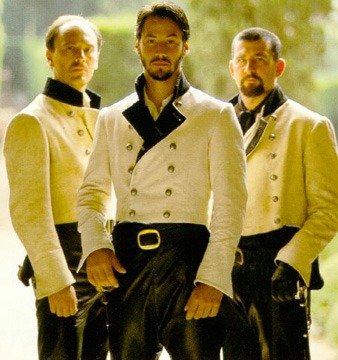
LEONATO.
If you swear, my lord, you shall not be forsworn.
[To DON JOHN]
Let me bid you welcome, my lord: being reconciled to the prince your
brother, I owe you all duty.
DON JOHN.
I thank you: I am not of many words, but I thank you.
LEONATO.
Please it your Grace lead on?
DON PEDRO.
Your hand, Leonato;we will go together.
[Exeunt all but BENEDICK and CLAUDIO.]
CLAUDIO.
Benedick, didst thou note the daughter of Signior Leonato?
BENEDICK.
I noted her not; but I looked on her.
CLAUDIO.
Is she not a modest young lady?
Saturday, May 22, 2010
Wednesday, May 12, 2010
Much Ado About Nothing (1)
Act 1.
Scene I. Before LEONATO'S House.
[Enter LEONATO, HERO, BEATRICE and others, with a Messenger.]
LEONATO.
I learn in this letter that Don Pedro of Arragon comes this night
to Messina.
MESSENGER.
He is very near by this: he was not three leagues off when I left
him.
LEONATO.
How many gentlemen have you lost in this action?
MESSENGER.
But few of any sort, and none of name.
LEONATO.
A victory is twice itself when the achiever brings home full numbers.
I find here that Don Pedro hath bestowed much honour on a young
Florentine called Claudio.
MESSENGER.
Much deserved on his part, and equally remembered by Don Pedro.
He hath borne himself beyond the promise of his age, doing in the
figure of a lamb the feats of a lion: he hath indeed better bettered
expectation than you must expect of me to tell you how.
LEONATO.
He hath an uncle here in Messina will be very much glad of it.
MESSENGER.
I have already delivered him letters, and there appears much joy in
him; even so much that joy could not show itself modest enough without
a badge of bitterness.
LEONATO.
Did he break out into tears?
MESSENGER.
In great measure.
LEONATO.
A kind overflow of kindness. There are no faces truer than those that
are so washed; how much better is it to weep at joy than to joy at
weeping!
BEATRICE.
I pray you, is Signior Mountanto returned from the wars or no?
MESSENGER.
I know none of that name, lady: there was none such in the army
of any sort.
LEONATO.
What is he that you ask for, niece?
HERO.
My cousin means Signior Benedick of Padua.
MESSENGER.
O! he is returned, and as pleasant as ever he was.
BEATRICE.
He set up his bills here in Messina and challenged Cupid at the flight;
and my uncle's fool, reading the challenge, subscribed for Cupid, and
challenged him at the bird-bolt. I pray you, how many hath he killed
and eaten in these wars?
But how many hath he killed? for, indeed, I promised to eat all of his
killing.
LEONATO.
Faith, niece, you tax Signior Benedick too much; but he'll be meet with
you, I doubt it not.
MESSENGER.
He hath done good service, lady, in these wars.
BEATRICE.
You had musty victual, and he hath holp to eat it; he is a very
valiant trencher-man; he hath an excellent stomach.
MESSENGER.
And a good soldier too, lady.
BEATRICE.
And a good soldier to a lady; but what is he to a lord?
MESSENGER.
A lord to a lord, a man to a man; stuffed with all honourable
virtues.
BEATRICE.
It is so indeed; he is no less than a stuffed man; but for the
stuffing,--well, we are all mortal.
LEONATO.
You must not, sir, mistake my niece. There is a kind of merry war
betwixt Signior Benedick and her; they never meet but there's a
skirmish of wit between them.
BEATRICE.
Alas! he gets nothing by that. In our last conflict four of his five
wits went halting off, and now is the whole man governed with one! so
that if he have wit enough to keep himself warm, let him bear it for a
difference between himself and his horse; for it is all the wealth that
he hath left to be known a reasonable creature. Who is his companion
now? He hath every month a new sworn brother.
MESSENGER.
Is't possible?
BEATRICE.
Very easily possible: he wears his faith but as the fashion of his
hat; it ever changes with the next block.
MESSENGER.
I see, lady, the gentleman is not in your books.
BEATRICE.
No;an he were, I would burn my study. But, I pray you, who is his
companion? Is there no young squarer now that will make a voyage with
him to the devil?
MESSENGER.
He is most in the company of the right noble Claudio.
Scene I. Before LEONATO'S House.
[Enter LEONATO, HERO, BEATRICE and others, with a Messenger.]
LEONATO.
I learn in this letter that Don Pedro of Arragon comes this night
to Messina.
MESSENGER.
He is very near by this: he was not three leagues off when I left
him.
LEONATO.
How many gentlemen have you lost in this action?
MESSENGER.
But few of any sort, and none of name.
LEONATO.
A victory is twice itself when the achiever brings home full numbers.
I find here that Don Pedro hath bestowed much honour on a young
Florentine called Claudio.
MESSENGER.
Much deserved on his part, and equally remembered by Don Pedro.
He hath borne himself beyond the promise of his age, doing in the
figure of a lamb the feats of a lion: he hath indeed better bettered
expectation than you must expect of me to tell you how.
LEONATO.
He hath an uncle here in Messina will be very much glad of it.
MESSENGER.
I have already delivered him letters, and there appears much joy in
him; even so much that joy could not show itself modest enough without
a badge of bitterness.
LEONATO.
Did he break out into tears?
MESSENGER.
In great measure.
LEONATO.
A kind overflow of kindness. There are no faces truer than those that
are so washed; how much better is it to weep at joy than to joy at
weeping!
BEATRICE.
I pray you, is Signior Mountanto returned from the wars or no?
MESSENGER.
I know none of that name, lady: there was none such in the army
of any sort.
LEONATO.
What is he that you ask for, niece?
HERO.
My cousin means Signior Benedick of Padua.
MESSENGER.
O! he is returned, and as pleasant as ever he was.
BEATRICE.
He set up his bills here in Messina and challenged Cupid at the flight;
and my uncle's fool, reading the challenge, subscribed for Cupid, and
challenged him at the bird-bolt. I pray you, how many hath he killed
and eaten in these wars?
But how many hath he killed? for, indeed, I promised to eat all of his
killing.
LEONATO.
Faith, niece, you tax Signior Benedick too much; but he'll be meet with
you, I doubt it not.
MESSENGER.
He hath done good service, lady, in these wars.
BEATRICE.
You had musty victual, and he hath holp to eat it; he is a very
valiant trencher-man; he hath an excellent stomach.
MESSENGER.
And a good soldier too, lady.
BEATRICE.
And a good soldier to a lady; but what is he to a lord?
MESSENGER.
A lord to a lord, a man to a man; stuffed with all honourable
virtues.
BEATRICE.
It is so indeed; he is no less than a stuffed man; but for the
stuffing,--well, we are all mortal.
LEONATO.
You must not, sir, mistake my niece. There is a kind of merry war
betwixt Signior Benedick and her; they never meet but there's a
skirmish of wit between them.
BEATRICE.
Alas! he gets nothing by that. In our last conflict four of his five
wits went halting off, and now is the whole man governed with one! so
that if he have wit enough to keep himself warm, let him bear it for a
difference between himself and his horse; for it is all the wealth that
he hath left to be known a reasonable creature. Who is his companion
now? He hath every month a new sworn brother.
MESSENGER.
Is't possible?
BEATRICE.
Very easily possible: he wears his faith but as the fashion of his
hat; it ever changes with the next block.
MESSENGER.
I see, lady, the gentleman is not in your books.
BEATRICE.
No;an he were, I would burn my study. But, I pray you, who is his
companion? Is there no young squarer now that will make a voyage with
him to the devil?
MESSENGER.
He is most in the company of the right noble Claudio.
Much Ado About Nothing (Character List)
MUCH ADO ABOUT NOTHING
by William Shakespeare
DRAMATIS PERSONAE
DON PEDRO, Prince of Arragon.
DON JOHN, his bastard Brother.
CLAUDIO, a young Lord of Florence.
BENEDICK, a young Lord of Padua.
LEONATO, Governor of Messina.
ANTONIO, his Brother.
BALTHAZAR, Servant to Don Pedro.
BORACHIO, follower of Don John.
CONRADE, follower of Don John.
DOGBERRY, a Constable.
VERGES, a Headborough.
FRIAR FRANCIS.
A Sexton.
A Boy.
HERO, Daughter to Leonato.
BEATRICE, Niece to Leonato.
MARGARET, Waiting-gentlewoman attending on Hero.
URSULA, Waiting-gentlewoman attending on Hero.
Messengers, Watch, Attendants, &c.
SCENE. Messina.
by William Shakespeare
DRAMATIS PERSONAE
DON PEDRO, Prince of Arragon.
DON JOHN, his bastard Brother.
CLAUDIO, a young Lord of Florence.
BENEDICK, a young Lord of Padua.
LEONATO, Governor of Messina.
ANTONIO, his Brother.
BALTHAZAR, Servant to Don Pedro.
BORACHIO, follower of Don John.
CONRADE, follower of Don John.
DOGBERRY, a Constable.
VERGES, a Headborough.
FRIAR FRANCIS.
A Sexton.
A Boy.
HERO, Daughter to Leonato.
BEATRICE, Niece to Leonato.
MARGARET, Waiting-gentlewoman attending on Hero.
URSULA, Waiting-gentlewoman attending on Hero.
Messengers, Watch, Attendants, &c.
SCENE. Messina.
Wednesday, March 24, 2010
Final Question
Both "No More Boomerang," and "Nobody Calls Me A Wog, Anymore," are poems that reflect the poets' personal struggles in life. Using examples from both poems, discuss HOW they reflect the poets' personal struggles and whether they may have overcome their boundaries.
Better responses will also draw from the information given in the links to each poet.
5 - 6 paragraphs
Better responses will also draw from the information given in the links to each poet.
5 - 6 paragraphs
Tuesday, March 23, 2010
Poet website links
Some links on Oodgeroo:
http://www.library.uq.edu.au/fryer/worth_fighting/2.html
http://www.cit.griffith.edu.au/~davidt/redlandbay/oodgeroo.htm
http://en.wikipedia.org/wiki/Oodgeroo_Noonuccal
Some links on Komninos Zervos:
http://en.wikipedia.org/wiki/Komninos_Zervos
http://www.othervoicespoetry.org/vol11/zervos/bio.html
http://www.library.uq.edu.au/fryer/worth_fighting/2.html
http://www.cit.griffith.edu.au/~davidt/redlandbay/oodgeroo.htm
http://en.wikipedia.org/wiki/Oodgeroo_Noonuccal
Some links on Komninos Zervos:
http://en.wikipedia.org/wiki/Komninos_Zervos
http://www.othervoicespoetry.org/vol11/zervos/bio.html
Sunday, March 21, 2010
"Nobody calls me wog, anymore" -- Komninos Zervos

Here's the 2nd Question:
"Nobody calls me wog, anymore", by Komninos Zervos, highlights the struggle the persona had to overcome certain boundaries in his life.
Describe the particular boundaries the persona had to fight against all his life and use examples from the text that illustrate his current attitude and how he now feels. Consider examples that highlight his "tone" of voice.
You may wish to read some background information on the poet:
http://www.othervoicespoetry.org/vol11/zervos/bio.html
"No More Boomerang" -- Oodgeroo

Here's the first question:
"No More Boomerang," by Ooderoo, is a poem about the boundaries Aboriginal people face now that European culture has taken over Australia.
Using examples from the text, explain how Oodgeroo is illustrating this point. Consider what particular boundaries the poem is highlighting. What struggles the Aboriginal people have now that their country has been "taken over?"
Use paragraph
s (At least 3) and correct punctuation when answering.
Subscribe to:
Posts (Atom)